Quick Summary
- AI systems are now deciding what the answer is, not just which links to show. Brands not optimized for answer engines are invisible at the moment decisions are being shaped.
- AEO structures content so AI can reliably interpret, summarize, and reuse it. It is different from SEO, which optimizes for discovery and rankings.
- Strong SEO alone is not enough. AI can find your content but still fail to reuse it if explanations rely on implied context, marketing language, or long narrative structures.
- Social media and third-party content carry more weight than ever. Independent explanations of your brand often appear in AI answers before your own pages do.
- Agencies and marketing leaders feel this shift first. When clients ask why their brand does not appear in AI answers despite strong SEO, the gap is almost always an AEO problem.
A Story That Explains Why AEO Matters
Summary: A market leader with strong SEO found itself absent from AI-generated answers. The problem was not discoverability. Content could be found but not reliably extracted.
The moment came during a routine leadership review.
A Chief Marketing Officer noticed something that did not align with the data they trusted. Their company ranked well in search, dominated industry conversations, and was widely recognized by peers. Yet when customers asked AI tools like ChatGPT, Gemini, Grok, Perplexity, and Claude basic questions about the category, the company rarely appeared in the answers. The AI responses referenced smaller competitors, neutral explainers, and outdated sources, while the market leader was absent.

At first, the assumption was a technical issue. The team reviewed SEO performance, site health, backlinks, and publishing cadence. Everything looked strong. The problem was not discoverability. The problem was that the company’s content was not being reused. AI systems could find it, but they could not reliably extract clear explanations from it. The content depended on brand context, implied authority, and marketing language that worked for humans but failed at the answer layer.
Over the next two years, this CMO and their team studied how AI systems interpret information, what makes content reusable without distortion, and why certain explanations consistently surface while others disappear. They tested formats, rewrote core pages, and measured how changes affected AI-generated answers.
It was the realization that finding information online and getting answers are no longer the same thing. In the past, people searched on Google, reviewed multiple links, and formed their own conclusions.
Today, large language models change that process. The AI gathers information from across the internet, analyzes it, and delivers a synthesized answer directly. AI is no longer helping people search. It is deciding what the answer is, fundamentally changing how people find information and make decisions.
The Prompt Insider exists because of that work. It reflects accumulated learning from real use, real failures, and practical application of Answer Engine Optimization as a discipline built for how information now moves through AI systems.
What Is Answer Engine Optimization?
Summary: AEO is the practice of structuring information so AI systems can interpret, summarize, and reuse it when answering questions. It targets clarity and accuracy, not traffic or rankings.
Answer Engine Optimization (AEO) is the practice of structuring information so AI systems can reliably interpret it, summarize it, and reuse it when responding to people’s questions.
The goal is not traffic or rankings, but clarity and accuracy when content becomes part of an answer. It is mainly about building authority and brand awareness to establish credibility.
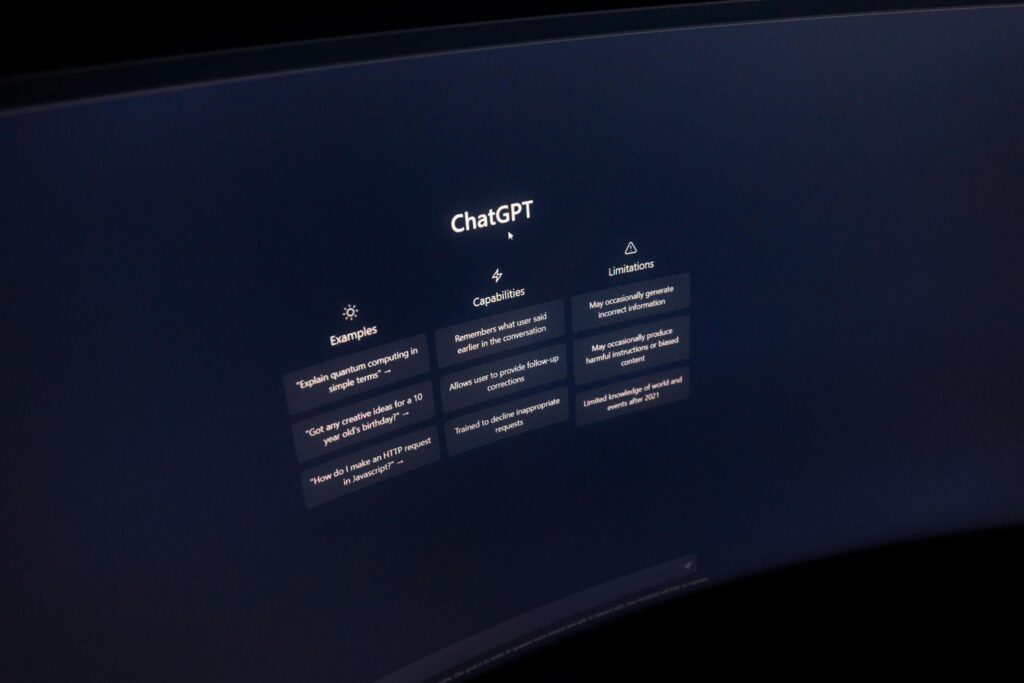
AEO focuses on how explanations are written, organized, and scoped. It assumes the reader may never visit a website because the explanation itself is delivered directly through an AI interface. That makes structure, definitions, and internal logic more important than persuasive framing or keyword density.
Why Answer Engine Optimization Became Necessary
Summary: Search behavior changed. AI now sits between users and the web, synthesizing answers directly. Content that works for humans often fails at the answer layer.
AEO exists because search behavior has fundamentally changed.
In the past, people turned to search engines like Google and typed queries such as “what is the best cleaning product for countertops.” They were shown a list of results ranked largely by keywords and traditional optimization signals (SEO), then expected to open multiple links and form their own conclusions.
Today, that process looks very different. When someone asks the same question inside tools like ChatGPT, Gemini, Grok, Perplexity, or Claude, the system does not return a list of links. Instead, the AI scans information across the internet, evaluates multiple sources, and synthesizes that information into a single, direct answer. The research, comparison, and summarization now happen before the user ever sees the result, which is where AEO comes into play.
This shift reduces friction and saves time, which is why people increasingly ask full, conversational questions, more like talking to a human than typing a search query. AI systems now sit between the user and the web, deciding which sources to trust, how to interpret them, and how to combine them into a response.
But that change introduced a new challenge.
Many high-quality articles rank well under traditional search models (SEO) but are difficult for AI systems to reuse. They often rely on implied context, narrative structure, or information spread across long passages, which makes them harder for machines to extract and reference accurately.
AEO closes that gap by shaping content in a way that aligns with how AI systems understand, retrieve, and reuse information when generating answers.
How Search and AI Now Interact
Summary: Traditional search still indexes content. AI then reads that content to extract answers directly, deciding what gets reused and what gets skipped.
Search today works in layers.
Traditional search engines still scan and index web pages. When you publish an article on your site, Google reads it, understands what it is about, and decides how relevant and credible it is compared to other content online. Based on those signals, your page may appear near the top of search results or be buried far enough down that most people never see it.
AI changes what happens next. Instead of simply sending users to those pages, AI systems read the content themselves. They pull out explanations, definitions, and key ideas so they can answer questions directly.
How AEO Works in Practical Terms
Summary: AEO aligns content with the three-step process AI uses to find, evaluate, and deliver information: index, extract, synthesize.
Modern search works in layers. Understanding those layers explains why Answer Engine Optimization matters.
- Traditional search still indexes your content. When you publish an article, search engines like Google scan the page to understand what it covers and how credible it appears compared to similar content. Based on those signals, your page may surface near the top of search results or be buried deep enough that most people never see it.
- AI systems read that content for the user. Instead of sending people to a list of links, AI tools scan multiple pages across the web. They pull out explanations, definitions, and key ideas so they can answer questions directly, without requiring the user to visit the original source.
- The AI chooses what gets reused. AI favors content that explains things clearly, stays focused on a single idea, and makes sense on its own. Sections that rely heavily on surrounding context or long narratives are harder for AI to reuse.
This three-step system is what makes AEO necessary. It aligns content with how modern search systems read, evaluate, and deliver information today.
How AI Systems Interpret Content
Summary: AI moves fast, skims without emotion, and needs content that explains itself clearly. Structure and consistency determine what gets quoted and what gets skipped.
AI systems don’t read content the way people do.
They move fast, skim everything at once, and process information without emotion or personal judgment. They are not reacting to tone or storytelling. They are just trying to understand what something is and whether it clearly answers a question.
Understanding how AI interprets content reveals why certain formatting and structural choices matter. There are patterns AI systems recognize as trustworthy and usable. Content that follows these patterns gets quoted. Content that doesn’t gets skipped.
Clarity Comes First
Clear subject references matter because AI systems need to track ideas across sentences and paragraphs without guessing.
Think about explaining your dog to someone who has never met him. If you say, “He does that thing when people come over,” they are going to ask what you mean. But if you say, “My dog barks when new people enter the house,” there is no confusion. AI works the same way. When you name the behavior or concept directly each time, it does not have to guess what you are referring to.
Consistency Builds Confidence
AI systems favor consistent language.
Referring to the same thing in multiple ways without explanation introduces uncertainty. Imagine giving directions and calling the same place “the grocery store,” “the market,” and “that shop on the corner” without clarifying they are the same location. A human can usually figure it out. AI is less forgiving. Content that sticks to one clear term makes it easier for AI to connect the dots and trust what it is reading.
Self-Contained Explanations Perform Better
Content written with Answer Engine Optimization in mind favors explanations that make sense by themselves.
Think of a recipe that says “cook until it looks right.” That works if someone is standing next to you. It fails if they are following the instructions alone.
AI works the same way. A sentence like “AEO is the missing piece in modern search” sounds interesting, but it does not explain anything. A sentence like “AEO helps content get selected and reused by AI when it answers questions” can stand on its own anywhere it appears.
Why Social Media Matters More in an AEO World
Summary: Social platforms are now part of how AI understands what is relevant and widely discussed. Consistent, clear social content reinforces the language AI pulls from when forming answers.
Social media used to be thought of as distribution. Post the content, drive traffic, move on. That mental model is outdated.
Today, social platforms are part of how AI systems understand what is relevant, current, and widely discussed. When ideas, explanations, and language patterns show up repeatedly across social channels, they reinforce how a topic is understood at scale. AI systems notice that repetition.
Think about how people actually use social media now. They are not just scrolling for entertainment. They are learning. They are asking questions in comments. They are saving posts that explain things clearly. That behavior creates signals around what explanations resonate and which ones feel authoritative.
For marketers, this means social content is no longer just top-of-funnel noise. Clear, well-explained posts help reinforce your brand’s language, definitions, and point of view across the internet. When AI systems look for consensus or common framing around a topic, social media often plays a role in shaping that picture.
Brands that treat social as an afterthought miss an opportunity. Brands that use it to consistently explain ideas in plain language help train the ecosystem that AI pulls from.
Why Third-Party Content Carries Outsized Weight
Summary: AI cross-references and validates using independent sources. Accurate external explanations of your brand often appear in AI answers before your own pages do.
What you say about yourself has always mattered less than what others say about you. That rule still holds, and it matters even more in an AEO-driven world.
AI systems do not rely solely on brand-owned content. They compare, cross-check, and validate information using third-party sources. Articles, reviews, explainers, and independent commentary help AI determine what is widely accepted versus what is purely promotional.
This is why third-party coverage often shows up in AI answers before brand pages do. Independent content tends to explain things more directly, without assuming familiarity or authority. That makes it easier for AI systems to reuse safely.
For marketers, this changes how earned media and external content should be valued. It is no longer just about backlinks or credibility signals. It is about making sure accurate explanations of your brand, product, or service exist outside your own website.
When third-party content explains what you do clearly, AI systems are more likely to repeat that explanation. When it does not exist, AI fills the gap with whatever it can find, which is often incomplete or outdated.
In an AEO world, marketers are not just managing their own content. They are shaping the broader narrative by influencing how others describe their space.
Why CMOs and Marketing Leaders Are Making the Shift
Summary: AI-generated answers shape brand perception before a link is ever clicked. If your content cannot be safely reused, you are absent from the conversation, not just ranked lower.
Marketers are responsible for how a company’s brand and reputation show up everywhere.
Across ads, websites, social media, and every other digital touchpoint. Today, that responsibility lives almost entirely online, where people spend most of their time and form opinions quickly.
AI adds a new channel to that mix. AI-generated answers may not look like marketing, but they shape perception before someone ever clicks a link or sees an ad. This shift is less about performance metrics and more about how a brand is understood.
Think of it like word of mouth, but at internet scale. If someone asks a friend about a company and gets a clear, confident explanation, that story sticks. If the explanation is vague or inaccurate, the damage is already done. AI works the same way. When someone asks an AI system about an industry, a solution, or a best practice, the answer becomes their first impression.
AI is now your spokesperson, whether you plan for it or not.
Those answers are built from existing content across the web. If a brand’s content cannot be clearly interpreted or safely reused, it gets left out of the response. At that point, the brand is not just ranking lower. It is absent from the conversation.
Answer Engine Optimization determines whether a brand’s expertise shows up accurately when AI systems explain a topic to potential customers, partners, or analysts. It is the difference between being part of the explanation and being invisible when the answer is formed.
Why Marketing Agencies Feel the Pressure First
Summary: Agencies are judged on whether clients appear in AI answers, not just rankings. The ones that understand AEO can diagnose the gap before client confidence is lost.
Marketing agencies feel this shift before anyone else because they are closest to visibility, performance, and client expectations.
AI changes the rules in ways agencies cannot ignore.
AI answers bypass clicks and attribution. When an AI system delivers an answer directly, there is no page visit to track and no clear path to measure influence. The brand either appears in the answer or it does not.
Clients notice when their brand is missing. Even with strong SEO metrics, clients increasingly ask why their company does not show up in AI summaries of their industry. Ranking well is no longer enough if the answer leaves them out.
Agencies are expected to explain the gap. When SEO performance looks healthy but AI visibility is low, agencies must be able to explain why. Those that understand Answer Engine Optimization can diagnose the issue and adjust content before confidence is lost.
The scope of responsibility has expanded. Agencies are no longer responsible only for ranking pages. They are now expected to influence how information is reused, summarized, and presented when the click never happens.
This is why agencies feel the pressure first. They are judged not just on rankings, but on whether their clients are present when AI delivers the answer.
Why Marketers Should Pay Attention to AEO Now
Summary: Fewer clicks, more informed prospects, and absent brand mentions in AI summaries are all signs the shift is already happening to your content.
Most marketers don’t wake up thinking about Answer Engine Optimization. They notice it in smaller moments.
A client mentions they asked an AI a question and didn’t hear their brand mentioned. A prospect shows up already informed but can’t explain where the information came from. Someone on the team realizes that fewer people are clicking, yet more people seem to “get it” before they ever land on the site.
That’s the shift showing itself.
AI has become part of how people learn, compare, and form opinions. When someone asks a question, the answer they receive feels settled. It feels authoritative. And in many cases, it becomes the version of the story they carry forward.
For marketers, that matters more than rankings alone. It means brand perception is being shaped in places you don’t control directly. It means your content might be influencing decisions even when no one visits your website. And it means silence in an AI answer can feel a lot like absence.
Answer Engine Optimization is about paying attention to that moment. It’s about making sure the explanations you’ve worked hard to create can actually be understood, reused, and repeated when AI systems summarize your space.
Marketers who understand this shift don’t panic. They adjust. They write more clearly. They explain things more directly. They think about how their ideas travel after they leave the page.
Frequently Asked Questions
Why should marketers care about AEO?
Marketers should care about AEO because AI systems are now shaping how brands are understood before prospects ever visit a website. When your brand is absent from AI-generated answers, you’re missing opportunities to influence perception at the earliest stage of the buyer journey.
How is AEO different from traditional SEO?
SEO helps content get discovered by search engines and ranked in results. AEO ensures that discovered content can be accurately extracted and reused by AI when generating answers. Both work together, but they serve different purposes in how information gets found and used.
What happens if we ignore AEO?
If you ignore AEO, your competitors who optimize for answer engines will appear in AI responses while your brand remains invisible. Over time, this shapes market perception in their favor, even if your SEO performance remains strong.
Do we need to choose between SEO and AEO?
No. SEO and AEO work together. SEO ensures AI systems can find your content. AEO ensures they can use it. The most effective content strategy incorporates both.
How long does it take to see AEO results?
Most brands start seeing improved AI visibility within 2–3 months of implementing AEO principles. However, building consistent presence across multiple AI platforms typically takes 6–12 months of sustained effort.