Quick Summary
- Apple confirmed WWDC 2026 runs June 8 to 12 and will focus heavily on AI advancements.
- The headline update is a completely redesigned Siri powered by Google’s Gemini models.
- The new Siri, codenamed Project Campos, is expected to include conversational memory, cross-app reasoning, and a standalone app.
- iOS 27 will also open Siri to third-party AI platforms through an Extensions system.
- For marketers, Siri becoming a true answer engine makes AEO visibility on Apple devices a major priority.
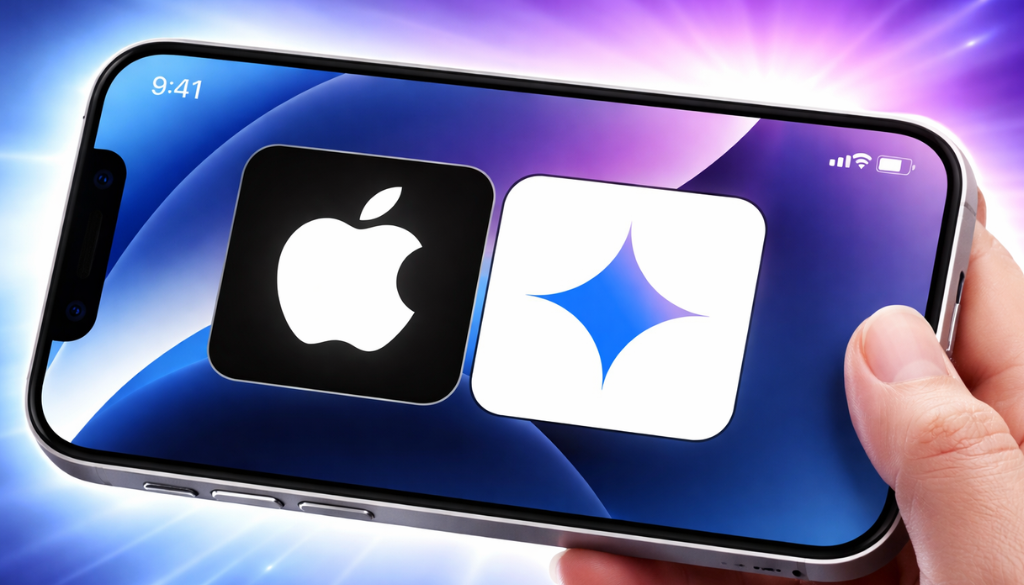
Apple confirmed WWDC 2026 runs June 8 to 12 and will center on AI advancements, headlined by a completely redesigned Siri powered by Google’s Gemini models.
The new Siri is a full chatbot-style assistant codenamed Project Campos, with conversational memory, cross-app reasoning, and a standalone app.
For brands investing in AEO, this is one of the biggest platform shifts of the year. When Siri becomes a genuine answer engine for a billion iPhone users, the question of whether your brand gets cited in Siri’s responses becomes a real marketing problem.
What Apple Announced
Summary: Apple is expected to reveal a Gemini-powered Siri at WWDC 2026, alongside AI-centered updates across iOS 27, macOS 27, iPadOS 27, and watchOS.
Apple confirmed WWDC 2026 will take place June 8 to 12, with the keynote expected to reveal iOS 27, macOS 27, iPadOS 27, and watchOS, all centered on AI advancements.
The centerpiece is a redesigned Siri, codenamed Project Campos, powered by a $1 billion per year partnership with Google that gives Apple access to a custom 1.2-trillion-parameter Gemini model.
The new Siri features a chatbot-style interface with iMessage-style conversation threads, conversational memory, on-screen awareness, cross-app reasoning, and a standalone Siri app. Spotlight search on iPhone will be replaced by Siri as the primary search interface.
Why it matters: This is not a small Siri upgrade. Apple is turning Siri into a chatbot-style answer engine that could become the default AI interface for iPhone users.
The scale of what’s being announced is significant. Apple is paying Google approximately $1 billion per year for access to Gemini, which runs in Apple’s own data centers and can be distilled into smaller on-device models.
According to MacRumors, iOS 27 will also open Siri to third-party AI chatbots via an Extensions system, ending OpenAI’s exclusive arrangement and allowing users to direct queries to Claude, Gemini, Grok, and others directly from within Siri.
This is not an incremental update to Siri. Apple explicitly delayed the advanced Siri features multiple times in 2025 before settling on the Gemini partnership as the fastest path to a competitive AI assistant.
The new Siri is a direct response to ChatGPT and Claude gaining ground as the default AI tool for a significant portion of the iPhone user base.
Why This Is a Major AEO Development
Summary: A redesigned Siri powered by Gemini creates a new answer engine at massive scale, which means brands need to think about Siri visibility as part of AEO.
A redesigned Siri powered by Gemini effectively creates a new answer engine at a scale that dwarfs every other AI platform.
Apple has over one billion active iPhone users worldwide. When those users ask Siri a question and receive a synthesized AI answer, the brands cited in that answer gain visibility. The brands that aren’t cited are invisible to that query.
AEO strategy has to account for Siri as a platform now, not a future consideration.
Until now, Siri has been largely outside the AEO conversation because it didn’t function like a genuine answer engine. It routed queries to Google or surfaced app actions.
The new Siri changes that entirely. With conversational memory, cross-app reasoning, and a chatbot-style interface, the redesigned Siri will synthesize answers the way ChatGPT and Perplexity do.
That means citation behavior, that means brands appearing or not appearing in responses, and that means a visibility opportunity that didn’t exist before.
Gemini signal: If Siri inherits Gemini’s retrieval logic, structured brand-owned content may matter more than it does on some other AI platforms.
The Gemini foundation matters for AEO practitioners because it tells you something about what Siri will reward.
Gemini already has a citation pattern that favors brand-owned websites more than any other major AI platform. According to a Yext analysis of over 6.8 million AI citations, 52% of Gemini’s citations come directly from brand-owned websites.
If the new Siri inherits Gemini’s retrieval logic, structured brand content is likely to perform well. We covered how Gemini’s citation behavior compares to ChatGPT, Claude, and Perplexity in our breakdown of how AI platforms decide which brands to mention.
The Siri Extension System and What It Means
Summary: iOS 27’s Extensions system could turn Siri into a routing layer for multiple AI engines, making multi-platform AEO more important.
iOS 27 introduces an Extensions system that allows users to route Siri queries to third-party AI platforms including Claude, Gemini, Grok, and ChatGPT.
This ends OpenAI’s exclusive arrangement with Siri and creates a multi-engine answer layer within Apple’s ecosystem.
For AEO, this means the same query from an iPhone user could be answered by different AI platforms depending on their preferences, which makes platform-specific optimization more important, not less.
The Extensions system is one of the more consequential details in the WWDC announcement for anyone tracking AI search behavior.
Rather than Siri being a single AI surface, it becomes a routing layer for multiple AI engines. A user who prefers Claude can have Siri hand off certain queries to Claude. A user on the default path gets Gemini-powered responses.
This means iPhone becomes a multi-engine AI environment rather than a single platform.
The practical implication for brand visibility is that appearing in Siri’s responses may require being citeable across multiple AI platforms simultaneously, depending on which engine the user has selected.
This reinforces the argument for building AEO foundations that work across platforms rather than optimizing for a single engine.
A brand that shows up in ChatGPT but not in Claude or Gemini will miss a portion of the iOS 27 audience regardless of how well it performs on any individual platform.
This is a direct challenge to single-platform AEO strategies and a strong argument for the multi-engine approach we’ve outlined in our guide on how to optimize content for AI search across ChatGPT, Claude, Gemini, and Perplexity.
Siri as a Search Replacement and the Zero-Click Implication
Summary: Apple replacing Spotlight with Siri would push more mobile discovery into AI-generated answers instead of traditional search results.
Apple plans to replace Spotlight search on iPhone with Siri as the primary search interface in iOS 27.
This is the most direct signal yet that AI answer engines are becoming the default discovery layer for mobile users. For brands that depend on mobile organic search traffic, this shift accelerates the timeline on which AEO visibility matters more than traditional SEO rankings.
Spotlight has historically been the entry point for on-device search on iPhone. Millions of users type queries into Spotlight every day to find apps, contacts, information, and websites.
Replacing Spotlight with Siri as the primary search interface means those queries will increasingly be answered by an AI assistant rather than routed to a search results page.
Mobile search shift: If Siri becomes the default search layer on iPhone, more discovery happens inside answers rather than on results pages.
This is the clearest confirmation yet that the future of mobile search is conversational and that zero-click behavior will accelerate further on Apple devices.
We’ve covered the broader implications of this shift in our piece on the zero-click marketing problem and in our look at the future of search.
The Siri replacement of Spotlight is the mobile version of exactly the dynamic those articles describe.
What Marketers Should Do Before iOS 27 Ships
Summary: Marketers should use the months before iOS 27 ships to strengthen structured content, direct answers, schema, and multi-platform AEO visibility.
iOS 27 is expected to ship in fall 2026. That gives marketers approximately six months to build the AEO foundations that will determine whether their brand appears in Siri’s responses when the new assistant rolls out to over a billion iPhone users.
The core actions are the same as for any AI engine: structured content, direct answers, third-party citation authority, and schema markup. The urgency is higher because the audience scale is larger than any other AI platform.
The WWDC keynote on June 8 will reveal more specifics about how the new Siri retrieves and cites information. But the foundational work doesn’t require waiting for those details.
Gemini’s citation behavior is already well-documented, and the new Siri will build on that foundation. Brands that have structured content for Gemini visibility are likely better positioned than those starting from scratch.
The extension to third-party AI platforms through iOS 27’s Extensions system also means that strong AEO performance across ChatGPT and Claude will carry over for users who choose those platforms.
The most resilient strategy heading into the iOS 27 release is multi-platform AEO coverage that doesn’t depend on any single engine’s citation logic.
The brands that act on this now are building the kind of compounding advantage that is difficult to close later.
The audience that will be using the new Siri in fall 2026 is the largest AI answer engine audience that has ever existed.
Our piece on the first-mover advantage in AEO covers why acting before a platform reaches scale matters more than acting after it.
And if you’re ready to audit where you stand today, our AEO content audit guide is the right starting point.
Bottom line: Siri becoming a Gemini-powered answer engine could make AEO visible to the largest mobile audience in the world. Brands that prepare before iOS 27 ships will be in a stronger position than brands waiting for the rollout.
FAQs
What is Apple announcing at WWDC 2026?
Apple’s WWDC 2026 runs June 8 to 12 and will center on AI advancements across iOS 27, macOS 27, iPadOS 27, and watchOS.
The main announcement is a completely redesigned Siri powered by Google’s Gemini models, featuring a chatbot-style interface, conversational memory, cross-app reasoning, and a standalone app.
iOS 27 will also introduce a Core AI framework replacing Core ML, and an Extensions system allowing users to route Siri queries to third-party AI platforms including Claude, Grok, and ChatGPT.
How is the new Siri powered by Google Gemini?
Apple is paying approximately $1 billion per year for access to a custom 1.2-trillion-parameter Gemini model that runs in Apple’s own data centers.
As of March 2026, Apple can also distill the full Gemini model into smaller on-device versions for iPhones and iPads that run without an internet connection.
The arrangement is white-labeled as Siri and Apple Intelligence, with all processing running through Apple’s Private Cloud Compute infrastructure to maintain user privacy.
What does the new Siri mean for AEO?
The redesigned Siri creates a new answer engine at an unprecedented scale, with over one billion active iPhone users worldwide.
When users ask Siri a question and receive a synthesized AI response, brands cited in that response gain visibility. Brands not cited are invisible to that query.
The replacement of Spotlight search with Siri as the primary search interface on iPhone accelerates the shift from traditional search clicks to AI-generated answers on mobile.
When does iOS 27 ship with the new Siri?
iOS 27 with the new Gemini-powered Siri is expected to ship in fall 2026, following the WWDC 2026 announcement on June 8.
Apple has delayed advanced Siri features multiple times in 2025, and some analysts expect certain capabilities may not ship at full scale with the initial iOS 27 release. The WWDC keynote on June 8 will provide the official timeline.
How should brands prepare for the new Siri?
Brands should build AEO foundations aligned with Gemini’s citation behavior, since the new Siri runs on Gemini.
That means structured content with direct answers, schema markup, third-party citation authority across industry publications and directories, and consistent entity presence across multiple authoritative platforms.
Given iOS 27’s Extensions system routing queries to multiple AI platforms, multi-engine AEO coverage is more valuable than optimizing for a single engine.