Quick Summary
- Anthropic sent a letter to the U.S. Senate Banking Committee accusing Alibaba of a large-scale distillation campaign against Claude.
- Operators allegedly affiliated with Alibaba used around 25,000 fraudulent accounts to generate 28.8 million exchanges with Claude between April 22 and June 5, 2026.
- The campaign reportedly targeted Claude’s software engineering and agentic reasoning capabilities, which Anthropic views as some of the model’s most commercially valuable skills.
- This marks a major escalation because Anthropic previously accused smaller Chinese AI startups, while this accusation names Alibaba directly.
- Distillation matters because it can let a rival model approximate frontier AI capabilities without spending the same time and money to build them from scratch.
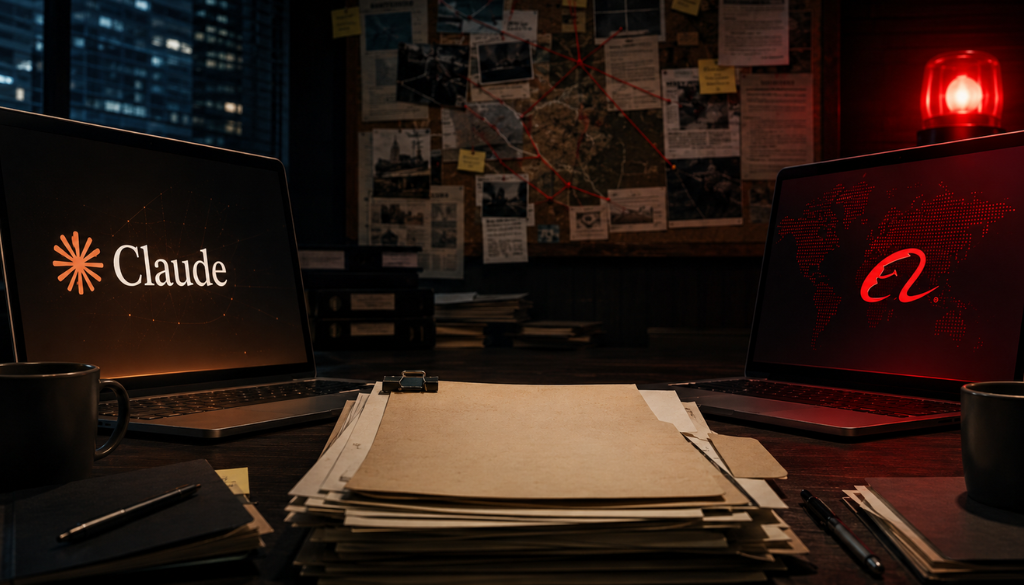
Anthropic sent a letter to the U.S. Senate Committee on Banking, Housing, and Urban Affairs on June 24, 2026, accusing Alibaba of illicitly extracting Claude’s AI capabilities at a scale the company described as the largest known distillation attack it has faced.
The accusation names Alibaba’s AI lab directly and marks a significant escalation in the dispute between U.S. AI companies and Chinese technology rivals over intellectual property, model access, and frontier AI competition.
The central issue is not a traditional hack. Anthropic says the alleged campaign used public access to Claude at massive scale, through fraudulent accounts, to extract useful model behavior and train a rival system.
| Metric | February 2026 Accusations | June 2026 Accusations |
|---|---|---|
| Targets accused | DeepSeek, MiniMax, Moonshot AI | Alibaba and Qwen Lab |
| Fraudulent accounts | Around 24,000 | Around 25,000 |
| Total exchanges | More than 16 million | 28.8 million |
| Reported scale | Largest distillation attack at the time | Largest known distillation attack against Anthropic |
What Did Anthropic Accuse Alibaba Of?
Summary: Anthropic says Alibaba used around 25,000 fake accounts to run 28.8 million exchanges with Claude over six weeks, targeting software engineering and agentic reasoning capabilities.
According to Tom’s Hardware’s reporting on the letter, the campaign ran from April 22 to June 5, 2026. During that period, operators allegedly affiliated with Alibaba and its Qwen AI lab created approximately 25,000 fraudulent accounts and used them to generate nearly 29 million exchanges with Claude.
Anthropic says the queries were carefully constructed and highly targeted, not random exploration of the model’s outputs. The goal, according to Anthropic, was to extract specific high-value capabilities from Claude rather than simply use the model as a normal customer would.
The specific capabilities under attack were Claude’s software engineering skills and its agentic reasoning abilities. These are the parts of the model that allow it to break down complex tasks, write functional code, debug outputs, and operate over long sequences of steps.
That focus matters. The alleged campaign was not mainly about copying Claude’s general writing style. It targeted the capabilities that make Claude commercially useful for automation, coding, and advanced workflow execution.
What Is AI Distillation?
Summary: AI distillation is a technique where a powerful model is queried at scale and its responses are used to train a smaller or cheaper model that approximates its capabilities.
AI distillation works by treating a powerful AI model as a teacher. A company or researcher sends the model large volumes of carefully designed prompts, collects the responses, and uses those prompt-and-response pairs as training data for another model.
Done well, the resulting model can approximate the original model’s performance on specific tasks at a fraction of the cost. This is why distillation has become one of the most sensitive issues in frontier AI.
The reason this matters is simple: building a model like Claude requires years of research, elite technical talent, and enormous compute spend. Distillation can let a competitor shortcut part of that investment by extracting the outputs of someone else’s model.
It does not require stealing source code or breaking into a system. Everything can happen through a public API. What makes the practice controversial or illicit is the scale, coordination, deception, and intent to reproduce commercially protected capabilities.
Why Is the Alibaba Accusation Such a Big Deal?
Summary: The Alibaba accusation matters because it names a major Chinese technology conglomerate, not just a smaller AI startup, and suggests that distillation attempts may be becoming more organized and more strategically important.
The Next Web notes that this is not an isolated incident. Anthropic made similar accusations in February 2026 against DeepSeek, MiniMax, and Moonshot AI, smaller Chinese AI startups it said had collectively conducted more than 16 million exchanges through roughly 24,000 fake accounts.
The Alibaba accusation is larger in scale and names a company with far greater resources and global reach. That changes the story from a startup enforcement problem into a much larger geopolitical and commercial issue.
The pattern suggests distillation attacks are becoming a competitive tactic, not a one-off event. If a company can approximate frontier model capabilities in weeks or months without spending the same amount on research and compute, the economics of AI competition change dramatically.
That is why Anthropic framed the issue as more than a terms-of-service violation. In its letter, Anthropic connected the alleged activity to broader U.S.-China AI competition and the strategic value of frontier model capabilities.
Why Are Agentic Capabilities the Main Target?
Summary: Agentic capabilities are valuable because they allow models to plan, code, use tools, and complete complex workflows with less human supervision.
The alleged Alibaba campaign reportedly focused on Claude’s software engineering and agentic reasoning capabilities because those are some of the most valuable parts of a modern AI model.
Agentic models can do more than answer questions. They can break down a task, plan a sequence of steps, write code, test outputs, call tools, revise their work, and continue until the task is complete.
That makes agentic capability commercially valuable for:
- Software engineering
- Data analysis
- Business automation
- Customer support workflows
- Research workflows
- Internal productivity tools
- AI agents that operate across multiple systems
In other words, the valuable target is not simply “better chatbot writing.” It is the ability to automate complex work. That is why agentic AI has become one of the most competitive areas in the AI market.
Why Does This Matter Beyond Anthropic?
Summary: If distillation at this scale works, every major model developer with a public API has reason to worry, including OpenAI, Google, Meta, and other frontier AI labs.
This issue matters beyond Anthropic because the same vulnerability exists for any major AI company that offers API access to powerful models. Public APIs are useful because they let developers and businesses build on top of frontier models. But they also create a channel that bad actors can exploit to query models at scale.
InfoWorld notes that companies such as OpenAI, Google, and Meta face the same broader risk because their models can also be probed through public access points.
For legitimate developers, the downstream effect could be tighter controls. If AI companies harden their APIs to prevent distillation, users may see more rate limits, stricter identity verification, usage audits, model access restrictions, or higher scrutiny around high-volume querying.
For marketers and businesses building on Claude or other frontier models, that matters. AI access may become less open over time as model developers try to protect their most valuable capabilities.
What Happens Next?
Summary: Anthropic’s decision to send the letter to the Senate Banking Committee suggests the company wants regulatory attention, not just private enforcement or a normal legal dispute.
Anthropic sent its letter to the Senate Banking Committee, which signals that the company is pursuing more than a private commercial response. The issue is being framed as part of a broader national competitiveness and AI security debate.
No official action had been announced as of June 25, 2026. However, the letter may increase pressure on lawmakers and regulators to examine how U.S. AI companies can protect frontier model capabilities from large-scale extraction.
Possible outcomes could include:
- More aggressive API monitoring by frontier AI labs
- Stricter account verification for high-volume users
- New contract language around model distillation
- Additional policy scrutiny around foreign access to frontier models
- More public disputes between AI labs and competitors accused of copying capabilities
The broader issue will not disappear. As frontier models become more powerful, their outputs become more valuable. That makes model extraction, distillation, and API abuse a central competitive risk for the entire AI industry.
Frequently Asked Questions
What is AI distillation?
AI distillation is the practice of feeding carefully structured queries to a powerful AI model, collecting its responses, and using those responses as training data for a new, cheaper model. Done at scale, it can allow a competitor to approximate parts of the original model’s capabilities without building the original model from scratch.
What did Alibaba allegedly do to Claude?
According to Anthropic’s letter to the U.S. Senate Banking Committee, operators affiliated with Alibaba created roughly 25,000 fraudulent accounts and used them to generate 28.8 million exchanges with Claude between April 22 and June 5, 2026. The campaign reportedly targeted Claude’s software engineering and agentic reasoning capabilities.
Is this the first time Anthropic has accused a company of distillation?
No. In February 2026, Anthropic accused DeepSeek, MiniMax, and Moonshot AI of conducting distillation attacks involving more than 16 million exchanges through approximately 24,000 fake accounts. The Alibaba accusation is larger and marks the first time Anthropic named a major Chinese technology conglomerate rather than a smaller AI startup.
Why does AI distillation matter?
AI distillation matters because it can let a rival model copy or approximate valuable capabilities from a frontier model without spending the same amount on research, training, and compute. That changes the economics of AI competition and creates major intellectual property concerns for model developers.
Could this affect regular Claude API users?
It could. If Anthropic and other AI companies increase protections against distillation, legitimate users may eventually see stricter rate limits, stronger account verification, more usage audits, or tighter restrictions on high-volume API access.
What happens next?
Anthropic sent the letter to the Senate Banking Committee, signaling that it is seeking regulatory attention in addition to private enforcement. No official action had been announced as of June 25, 2026, but the issue may influence future rules around AI model access, foreign competition, and API abuse.
About the author
Kai Williams
Kai Williams has been in marketing for years, with a long background in SEO before AEO had a name. He stepped into Answer Engine Optimization the moment AI started reshaping how people search, and has been tracking the shift ever since. At Prompt Insider, he covers AEO, AI marketing, and the future of search, breaking down what is changing and what brands need to do about it.