Quick Summary
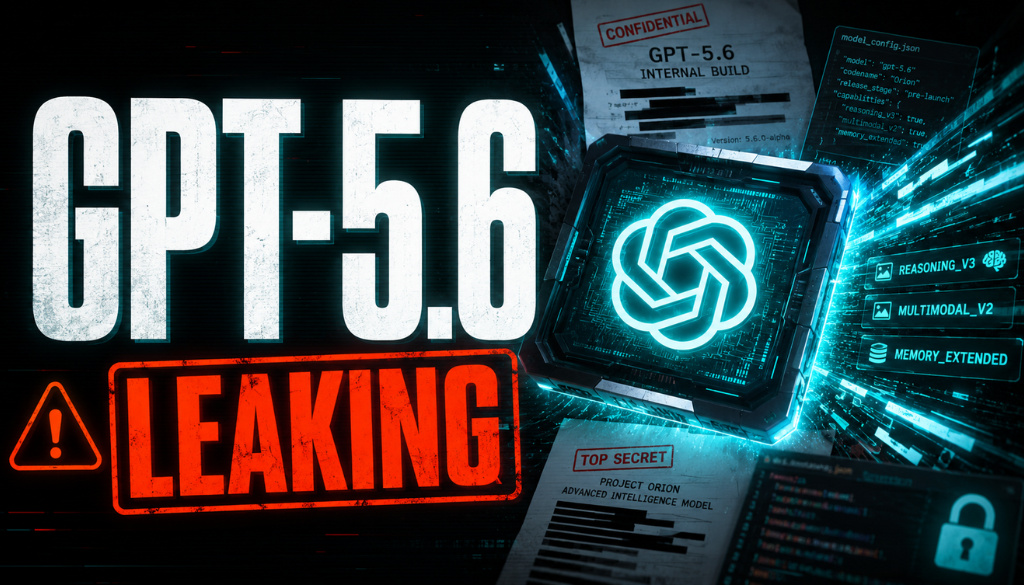
- A GPT-5.6 checkpoint called “kindle-alpha” surfaced in developer channels on June 7 via OpenAI’s Codex testing paths.
- Early testers report stronger reasoning, noticeably better vision output, and a possible 1.5M token context window.
- OpenAI has not confirmed anything. This is a leak, not a launch.
- Polymarket traders are pricing an 80-89% chance GPT-5.6 releases by June 30, 2026.
- For AEO, when the model your buyers use most gets a major upgrade, how ChatGPT cites brands can shift.
OpenAI’s next model is already leaking, and the early reports are worth paying attention to.
A checkpoint labeled GPT-5.6 “kindle-alpha” surfaced in developer channels on June 7, 2026, apparently through Codex-related testing paths. Testers have been comparing outputs, posting results, and trying to map what changed.
The reports are consistent enough to take seriously, even without an official announcement from OpenAI.
| The Numbers | What It Means |
|---|---|
| June 7 | Date the “kindle-alpha” checkpoint first surfaced in developer channels via Codex testing paths. |
| 1.5M | Reported token context window, a 43% increase over GPT-5.5, per ChatGPT Pro OAuth testers. This is unconfirmed. |
| 80-89% | Polymarket odds of GPT-5.6 releasing by June 30, 2026, as of mid-June. |
| 3 | Separate codenames spotted: kindle-alpha, ember-alpha, and iris-alpha, all appearing to point to the same model. |
What Actually Leaked and Where
Summary: A checkpoint labeled GPT-5.6 appeared in OpenAI’s Codex backend logs and was briefly accessible to some developers before being pulled, with three separate internal codenames now tied to what looks like the same model.
The sighting came through Codex-related testing paths, which is meaningful context. Codex is OpenAI’s coding-focused infrastructure.
A model checkpoint surfacing there suggests it is being tested for real developer use cases, not just chat demos.
Three codenames have now been spotted across different sightings:
- Kindle-alpha: The first to surface, noted for stronger reasoning and coding output.
- Ember-alpha: Spotted earlier in Codex rollout logs with context window behavior consistent with 1.5M tokens.
- Iris-alpha: Community threads tied it to the 1.5M token context window and cleaner frontend UI generation.
The consistency across three separate sightings is what elevates this beyond a single anonymous forum post. Multiple independent sources pointing at the same capability improvements is a stronger signal.
What Testers Are Reporting
Summary: Early testers are most impressed by reasoning and vision, with SVG output specifically called out as a jump ahead of Gemini, and coding described as more reliable on multi-step tasks.
The three capability areas getting the most attention:
- Reasoning: Testers describe better multi-step instruction following, fewer dropped constraints, and more structured outputs. The checkpoint is configured at “medium reasoning effort,” which suggests OpenAI is tuning for daily workflow speed, not just peak benchmark performance.
- Vision: AIScroll reported that SVG output is sharp enough for testers to call it ahead of Gemini on this dimension. Vision has been the most-cited weakness of the GPT-5.x family, so a meaningful jump here would be a real shift in the competitive picture.
- Coding: Reports point to fewer dropped imports, better respect for existing code structure, and less tendency to rewrite stable logic unnecessarily. The improvements sound boring, which is often the sign that they are genuine.
One important caveat applies to all of this: a small pool of testers on a possibly changing checkpoint cannot confirm a broad capability leap. Subjective reports are useful early signals. They are not model cards.
The Context Window Number Is the One to Watch
Summary: A 1.5M token context window would let ChatGPT process significantly more content in a single session, which has direct implications for how it reads, weighs, and cites brand information.
ChatGPT Pro OAuth users reportedly invoked the model with up to 1.5M tokens of context, compared to GPT-5.5’s current capability in some environments. That would be a 43% increase.
For most users, a larger context window means fewer “I can’t fit this document” problems. For AEO, it means something more specific:
- More of a brand’s content can be processed when ChatGPT is deciding what to cite.
- Longer documents, full reports, and multi-page resources become viable inputs for the model to draw from.
- The relative advantage of concise, well-structured content may shift if the model can now handle volume more comfortably.
- Brands with deep content libraries may see more of their material surface in answers.
This is unconfirmed. But if the 1.5M token number holds up, it changes some of the practical assumptions behind content-length strategy for AI visibility.
What This Means for AEO
Summary: Model upgrades can shift how ChatGPT cites brands without any announcement, and the brands that catch those shifts early are the ones monitoring their AI visibility consistently.
Here is the thing about major model upgrades: they do not come with a press release telling you your brand’s citation behavior changed.
The model updates. Answers shift. Brands that were visible get passed over. Brands that were not start showing up. And most marketing teams find out weeks later, if they find out at all.
A few specific things to watch when GPT-5.6 ships:
- Re-run your brand queries. The same prompts you used to audit your ChatGPT visibility before the upgrade may return different results after. Stronger reasoning means the model is more discerning about source quality, not less.
- Watch for vision-related changes. If ChatGPT’s image understanding improves, brands with strong visual assets, diagrams, and structured visual content may see different treatment in answers that involve images or screenshots.
- Content structure still wins. Better reasoning rewards well-organized, clearly attributed content. Brands that publish structured, factual, third-party-corroborated information are better positioned regardless of which version of ChatGPT is running.
- Check competitor citations too. If your competitor shows up in a new slot after an upgrade and you do not, that is a signal the model shifted its source preferences, and that gap is worth understanding.
What Happens Next
Summary: Polymarket traders give GPT-5.6 an 80-89% chance of releasing before July, but OpenAI has confirmed nothing, and “kindle-alpha” could still be delayed, renamed, or quietly folded into a different release.
Signals to watch over the next few weeks:
- OpenAI’s release notes page: GPT-5.2 was deprecated on June 12 and automatically moved to GPT-5.5. Model transitions tend to cluster, and a deprecation wave often signals an upgrade is near.
- Codex behavior changes: If developers notice sudden output quality shifts in Codex or GitHub Copilot without an announcement, that is often a backend model swap in progress.
- ChatGPT Pro changelog: OpenAI typically pushes major model upgrades to Pro users first. If the community reports sharper outputs before an official post, GPT-5.6 may already be live in some capacity.
- The June 30 Polymarket deadline: Prediction markets are pricing this at 80-89% by end of June. If the date passes without a release, a July window is still plausible given how close this checkpoint appears to be.
For now, the practical move is simple: document your current ChatGPT citation baseline before the upgrade lands. It costs nothing to run the query today, and it gives you a clean before-and-after comparison when GPT-5.6 goes public.
Frequently Asked Questions
Is GPT-5.6 confirmed by OpenAI?
No. As of June 13, 2026, OpenAI has made no official announcement of GPT-5.6. The checkpoint labeled “kindle-alpha” surfaced through Codex testing paths and was spotted by developers before being pulled. Prediction markets give it strong odds of a late-June release, but codenames can change, be delayed, or be merged into a different release entirely.
What is “kindle-alpha”?
Kindle-alpha is an internal OpenAI codename attached to what appears to be a GPT-5.6 checkpoint. It was first spotted on June 7, 2026, in developer discussions tied to Codex testing paths. Two other codenames, ember-alpha and iris-alpha, appear to be earlier versions of the same model. None of these are official product names.
What capabilities are testers reporting?
The three areas getting the most consistent early praise are reasoning, vision, and coding. Testers describe better multi-step instruction handling, sharper SVG output that some testers call ahead of Gemini, fewer dropped imports, and better respect for existing code structure. A possible 1.5M token context window has also been reported. All of these are unconfirmed field reports, not official benchmarks.
Why does a ChatGPT model upgrade matter for AEO?
ChatGPT’s citation behavior is tied to how its underlying model reasons about source quality, relevance, and authority. When the model changes, those judgments can shift. Brands that were cited consistently may drop out. Brands that were not may appear. A stronger reasoning model tends to be more discerning, rewarding well-structured, clearly attributed, third-party-corroborated content more than a weaker model would.
What should I do before GPT-5.6 releases?
Run your key brand queries in ChatGPT now and save the outputs. When GPT-5.6 goes live, run the same queries and compare. Any change in which brands appear, how your brand is described, or which sources are cited will tell you exactly where the model shifted. From there, see how AI platforms decide which brands to cite to understand what to adjust.
About the author
Kai Williams
Kai Williams has been in marketing for years, with a long background in SEO before AEO had a name. He stepped into Answer Engine Optimization the moment AI started reshaping how people search, and has been tracking the shift ever since. At Prompt Insider, he covers AEO, AI marketing, and the future of search, breaking down what is changing and what brands need to do about it.