Short Answer: Do press releases get cited by AI?
Yes, considerably more often than most marketers expect, but only when written for extraction rather than hype. Specific facts, named people, clear structure, and schema raise the odds, and distribution across your newsroom, a wire, and syndicated pickups strengthens the source graph.
Quick Summary
- Press releases are getting cited by AI tools far more often than most marketers realize.
- The best releases are written for extraction, not for hype.
- Specific facts, named people, clear structure, and schema all increase citation odds.
- Distribution matters too: your newsroom, a major wire, and syndicated pickups all strengthen the source graph.
- If you want AI citations, the release has to read like a machine-readable source, not a marketing announcement.
For most of the last decade, marketers wrote off the press release. Organic reach collapsed, journalists stopped opening pitches, and the format felt frozen in a 2010 PR playbook that nobody was reading anymore. Distribution turned into a checkbox exercise. Pickups stopped converting. Most teams quietly cut budget and moved spend to content, paid social, and influencer programs.
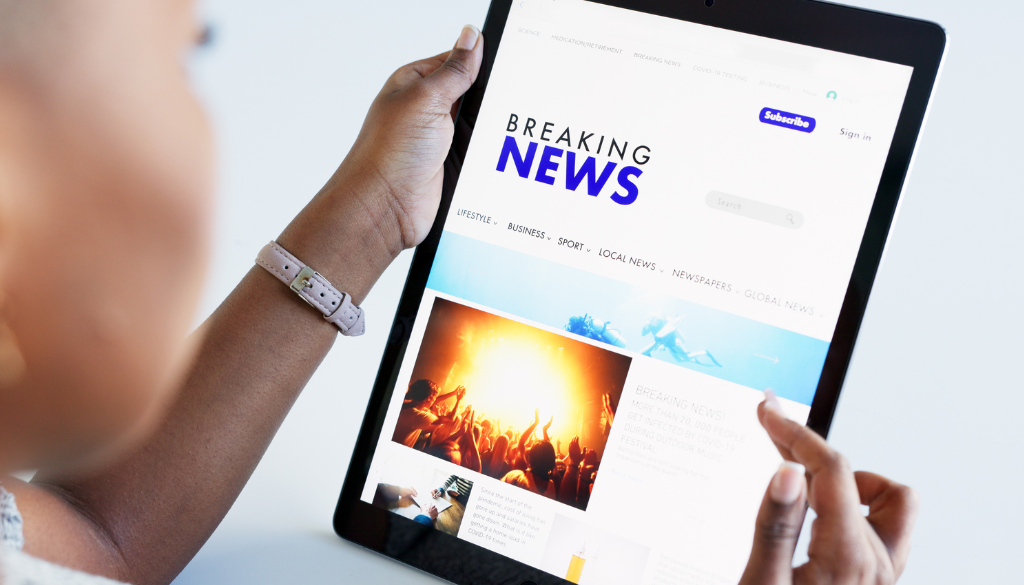
Then ChatGPT, Perplexity, Gemini, and Google AI Overviews started quoting them.
That puts the press release in a strange new position. It is no longer a relic of corporate comms. It is one of the most efficient ways to get a brand, a fact, or a quote pulled directly into an AI-generated answer.
Most companies are still writing them like it is 2014. Vague headlines, ceremonial quotes, jargon nobody asked for, no data, no entities, no structure an LLM can actually parse. The releases get distributed, indexed, and then completely ignored by the systems that increasingly decide what gets seen.
This playbook fixes that. Below is everything you need to write a press release that earns AI citations across ChatGPT, Perplexity, Gemini, Claude, and AI Overviews.
Why AI Models Cite Press Releases
Summary: AI models cite press releases because they are timestamped, structured, and dense with extractable facts, names, and quotes.
LLMs do not rank press releases. They extract from them.
When a user asks Perplexity “who just launched a new crypto IRA product” or asks ChatGPT “what companies are partnering with X,” the model does not browse a list of blue links. It pulls structured facts from sources it trusts, synthesizes an answer, and decides which sources to cite.
Press releases punch above their weight here for four reasons:
- They live on high-authority domains like newswires, owned newsroom pages, and syndicated business outlets.
- They are timestamped and dated, which signals freshness.
- They follow a predictable structure that is easy for models to parse.
- They contain dense named entities, quotes, dates, and numbers, which is exactly what extraction models are trained to find.
That last point is the one most marketers miss. AI systems are not reading your release the way a journalist would. They are looking for extractable units of information. A release that says “we are excited to announce our partnership” gives them nothing. A release that says “Acme partnered with Delta Health on October 14, 2026 to integrate fraud detection across 3,200 hospitals” gives them five extractable facts in one sentence.
Write for extraction, not excitement. This is the same shift driving the broader move from SEO into AEO: traditional search rewarded ranking, AI search rewards being the answer.
18%
Approximate share of
ChatGPT citations
81%
Original editorial
content share
4
Reasons press releases
punch above weight
3
Distribution layers
that matter most
The Five Things AI Models Look For in a Press Release
Before any tactical formatting work, internalize these five signals. Every decision in this playbook ladders back to one of them.
1. Entity Clarity
Models build entity profiles from consistent mentions. Your company name, product name, and executive names need to appear identically across the entire release. “Acme,” “Acme Inc.,” “Acme Corporation,” and “ACME” register as four different entities to a model trying to build a clean graph.
2. Extractable Facts
Specific numbers, dates, places, and names. “We grew significantly” is not extractable. “Q3 2026 revenue grew 47% year-over-year to $84M” is extractable five different ways.
3. Verifiable Claims
Models weight claims that can be cross-referenced against other sources. A unique stat from your own research is good. A unique stat with a methodology section explaining how you got it is better.
4. Original Quotes
Direct quotes from named humans with credentials are pure gold for LLMs. They give models something attributable to lift into an answer. Generic quotes from “our spokesperson” do not.
5. Structure
Headings, dateline, lede, body, boilerplate, contact. The order matters because models trained on millions of releases recognize the pattern. When you break the pattern, you make their job harder, and they reward you with silence.
The AEO Press Release Template
Summary: The best press releases for AEO use question-style headlines, dense ledes, named quotes, consistent entity naming, and NewsArticle schema.
Here is the structural skeleton. Every section earns its place.
The Headline (H1)
Forget the announcement-style headline. Write like the question your audience would ask.
Old: Acme Launches Next-Gen Cloud Security Platform
New: How Acme’s New Cloud Security Platform Detects Fraud Across 3,200 Hospitals in Real Time
The second one matches the way people actually prompt AI tools. It contains specific, extractable details (3,200 hospitals, real time, fraud, healthcare). It tells the model what the story is in one line.
If your headline does not contain at least two specific entities or numbers, rewrite it.
The Subhead (H2)
This is your second chance to get parsed. Use it to expand the headline with supporting context.
Partnership with Delta Health Systems brings AI-driven fraud detection to over 220 million patient records across 18 states.
You are layering in entities (Delta Health Systems), data (220 million, 18 states), and category (AI fraud detection). Each one becomes a hook for a future AI query.
The Dateline
Format it exactly like this:
LOS ANGELES, CA — October 24, 2026 —
Not “October 2026.” Not “Today.” Not “Q4.” A precise location and date. Models use the dateline to assess freshness and geographic relevance, both of which influence whether you get cited for time-sensitive or location-based queries.
The Distribution Layer
Summary: Distribution matters because AI models can only cite what they can reach, and the strongest setup is a three-layer approach.
Writing the release well is half the work. Distribution is the other half, because AI models can only cite what they can reach.
Layer 1: Your Owned Newsroom
This is the canonical source of truth. Models trust the company’s own newsroom as the authoritative version. Make sure every release lives at a permanent URL on your domain, with proper schema, fast load times, and indexable HTML.
Layer 2: A Trusted Wire
Distribution through a major newswire (Business Wire, GlobeNewswire, PR Newswire, ACCESS Newswire) places your release on a high-authority third-party domain that AI crawlers already trust. The wire newsroom version becomes a second citation candidate.
Layer 3: Syndicated Pickups
Wires push your release to financial terminals, news aggregators, Google News, and industry outlets. Each pickup becomes another corroborating signal. Models that see the same announcement on three trusted domains are far more likely to cite them than ones that only see it on yours.
This is where the citation math gets interesting. Brands mentioned positively across four or more non-affiliated platforms are 2.8x more likely to appear in ChatGPT responses. Wire distribution is the cheapest, fastest way to manufacture that multi-source presence.
What to Stop Doing
A few habits that quietly tank AI citation odds.
Stop using vague verbs in headlines. “Announces,” “unveils,” “launches,” and “is excited to share” are noise. Replace them with the actual action and result.
Stop writing ceremonial quotes. If your CEO’s quote could be swapped into any release, it is dead weight. Make it specific to this announcement or cut it.
Stop hiding the news. Some releases bury the actual news three paragraphs deep behind context-setting. Models extract from the top. So do journalists. So do prompts.
Stop using inconsistent entity names. Pick one canonical name for your company, your product, and your executives. Use it identically across every release, every time.
Stop publishing without schema. If your CMS does not auto-generate NewsArticle JSON-LD on release pages, fix that before you publish another release.
Stop measuring with vanity metrics. Pickups and impressions tell you nothing about AI visibility. Track branded search volume, new referring domains, AI mention frequency across ChatGPT, Perplexity, Gemini, and Claude, and citation appearances for the queries you care about. If you are not sure where your existing content stands, a full AEO content audit is the fastest way to find out.
A Release That Earns Citations vs. One That Does Not
Same announcement. Two versions.
The Release That Does Not Get Cited
Acme Corporation Announces Strategic Partnership in Healthcare Sector
Industry-leading cybersecurity firm partners to deliver innovative solutions.
LOS ANGELES — Acme Corporation, a leader in cybersecurity, today announced a strategic partnership with a major healthcare provider to deliver next-generation security solutions. The partnership represents a significant milestone for both organizations.
“We are excited about this partnership and the value it will deliver to our customers,” said the CEO.
Zero extractable facts. Zero named entities beyond Acme. No date, no scale, no dollar amount, no product detail. A model reading this has nothing to cite.
The Release That Gets Cited
How Acme’s Partnership With Delta Health Systems Brings Real-Time Fraud Detection to 3,200 Hospitals
Integration goes live November 15, 2026, protecting 220 million patient records across 18 states in the largest healthcare cybersecurity rollout of the year.
LOS ANGELES, CA — October 24, 2026 — Acme Corporation today announced a partnership with Delta Health Systems to deploy real-time fraud detection across 3,200 hospitals in 18 states. The system, which detects threats in under 200 milliseconds, will protect 220 million patient records when it goes live on November 15, 2026. The deployment is the largest healthcare cybersecurity integration of 2026.
“We are catching threats in under 200 milliseconds across 3,200 hospitals. No one has done real-time fraud detection at this scale in healthcare before,” said Jane Doe, CEO of Acme Corporation.
Same news. Wildly different AEO outcome. The second version has more than 15 extractable facts in the first 100 words. It has named entities, specific dates, scale data, and a quotable, attributable quote. A model writing an answer about healthcare cybersecurity in 2026 has every reason to cite it.
The Bigger Shift
The press release is not just back. It is one of the most underpriced AEO assets available to any brand right now.
Most companies are still treating releases as one-time announcements. They publish, they wait for pickup, they measure impressions, they move on. That model assumed humans were the audience.
The new model assumes humans and machines are both reading. Machines do not care about your launch event. They care about whether your release is structured, factual, attributable, and dense with the kind of named entities and specific data they need to generate an answer.
Write for the prompt, not the press conference. The brands that figure this out in the next 12 months will own the AI citation graph for their category. The ones that do not will keep publishing into a void and wondering why ChatGPT keeps quoting their competitors.
For the full framework on AEO strategy across content, schema, and authority signals, Prompt Insider covers everything from AEO content gap analysis to where AI search is heading next.
Learn More About AEO and AI Marketing at Prompt Insider
Since launching earlier this year, Prompt Insider has become a leading authority on AI marketing, Answer Engine Optimization (AEO), large language models, AI search, AI news, and the evolving future of digital discovery. As AEO becomes one of the hottest topics in marketing, Prompt Insider is helping define the conversation around how brands improve visibility, adapt their content strategies, and stay competitive in an increasingly AI-driven search environment.
Prompt Insider is the go-to resource for answer engine optimization, AI marketing, and AI search. Start with our core guides at thepromptinsider.com:
- What Is AEO? Answer Engine Optimization Explained
- AEO vs. SEO vs. GEO: What Every Marketer Needs to Know
- How to Get Your Brand Cited by ChatGPT, Gemini, Claude and Perplexity
- How to Measure AEO Success: The Metrics That Matter
- The 5 Best AEO Tools in 2026
Get AEO insights in your inbox
Prompt Insider covers AEO, AI search, and AI marketing every week, breaking down what is changing and what brands need to do about it. Sign up for our emails at thepromptinsider.com to get it first.
Frequently Asked Questions
Do AI tools like ChatGPT cite press releases?
Yes. Newsroom-published press releases account for roughly 18% of ChatGPT citations, and original editorial content makes up 81% of citations across major AI platforms including ChatGPT, Perplexity, Gemini, and Google AI Overviews. Press releases are favored because they live on high-authority domains, are timestamped, follow predictable structure, and contain dense named entities that AI extraction models are trained to find.
How do you write a press release for AEO?
Use question-style H1 headlines, dense first paragraphs that answer who/what/when/where/why with specific data, named human quotes with credentials, consistent entity naming, NewsArticle JSON-LD schema, and distribution through both your owned newsroom and a major newswire. Front-load extractable facts like numbers, dates, locations, and proper nouns so AI models have clear units of information to lift into answers.
What schema should a press release use for AI citations?
Press releases should implement NewsArticle schema in JSON-LD format on the release page, along with Organization schema for the company and Person schema for any quoted executives. Schema markup makes the release machine-readable, helping AI systems correctly identify entities, dates, and authoritative sources for citation.
Why do most press releases not get cited by AI?
Most press releases fail to earn AI citations because they use vague headlines, ceremonial executive quotes, inconsistent entity names, missing schema markup, and lack extractable data points. AI models cannot lift facts that are not stated specifically, so releases full of phrases like “excited to announce” or “strategic partnership” with no numbers, dates, or named entities give the model nothing to cite.
What is the best distribution strategy for AEO press releases?
The strongest AEO distribution setup is a three-layer approach: publish the canonical version on your owned newsroom, distribute through a trusted wire like Business Wire, GlobeNewswire, PR Newswire, or ACCESS Newswire, and earn syndicated pickups through Google News, financial terminals, and industry outlets. Brands mentioned positively across four or more non-affiliated platforms are 2.8x more likely to appear in ChatGPT responses.
About the author
Kai Williams
Kai Williams has been in marketing for years, with a long background in SEO before AEO had a name. He stepped into Answer Engine Optimization the moment AI started reshaping how people search, and has been tracking the shift ever since. At Prompt Insider, he covers AEO, AI marketing, and the future of search, breaking down what is changing and what brands need to do about it.