Quick Summary
- OpenAI launched ChatGPT advertising on February 9, 2026, and self-serve ad tools are rolling out in April 2026.
- The pilot crossed $100 million in annualized revenue within six weeks, with 600+ advertisers already running campaigns.
- Paid placements and organic AI citations now coexist inside the same ChatGPT interface.
- Organic AEO still matters because citations appear inside the answer, while sponsored units appear separately below it.
- The strongest strategy now combines organic AEO authority with early paid testing on high-intent ChatGPT prompts.
Self-serve ChatGPT ads go live this month. Organic AEO citations and paid placements now share the same AI interface. The rules just changed.
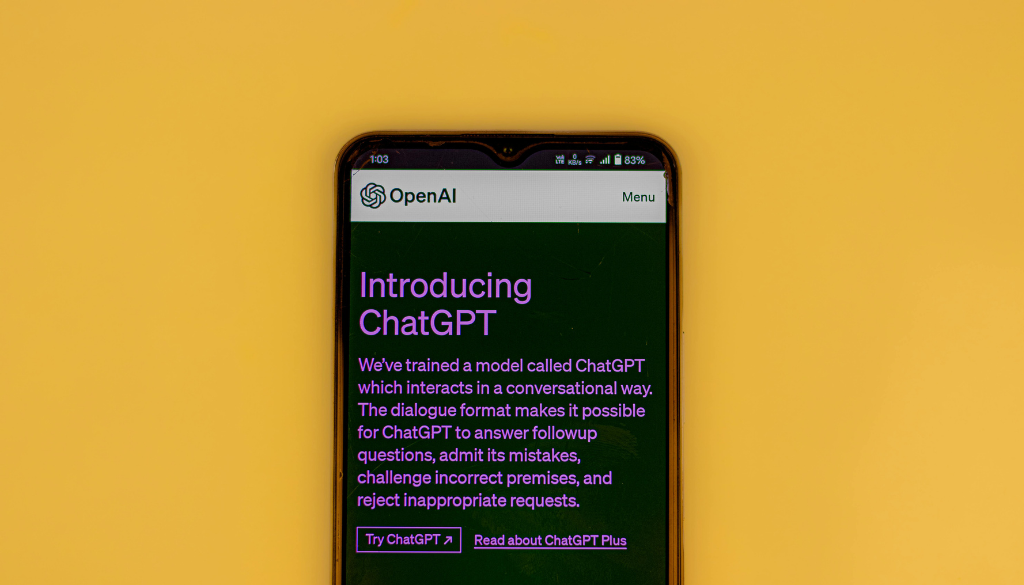
Something shifted this week that most marketers have not fully processed yet. ChatGPT, the platform driving roughly 20% of global AI search-related traffic and the most-cited source in AEO strategies across every industry, is now an advertising platform.
Not eventually. Now. Self-serve access drops this month.
For teams that have spent the last 12 months building organic AEO citation strategies, this changes the competitive landscape in ways that are still playing out in real time.
Here is what happened, what the data shows, and what you need to do differently starting today.
What Just Happened: The ChatGPT Ads Timeline
Summary: ChatGPT ads launched in February 2026, crossed $100 million in annualized revenue within six weeks, and self-serve access is opening in April 2026.
ChatGPT advertising launched February 9, 2026 for US users on Free and Go tiers. The pilot crossed $100 million in annualized revenue in six weeks. On March 26, OpenAI announced international expansion to Canada, Australia, and New Zealand.
Self-serve advertiser tools launch in April 2026, removing the $200,000 minimum and opening the platform to mid-market brands and agencies for the first time.
This is the fastest revenue ramp of any new ad platform in recent history. For context, the timeline matters:
- January 16, 2026: OpenAI announces ads are coming to ChatGPT’s Free and Go tiers.
- February 9, 2026: Ads go live in the US. Launch partners include Target, Ford, Adobe, WPP, Omnicom, and Dentsu.
- March 2, 2026: Criteo becomes the first formal ad tech partner in the pilot.
- March 26, 2026: OpenAI confirms $100M in annualized revenue and announces expansion to Canada, Australia, and New Zealand.
- April 2026: Self-serve tools launch, removing the $200K minimum and opening access to any advertiser.
According to CNBC’s reporting on the March 26 announcement, OpenAI is now working with more than 600 advertisers and says it has seen no impact on consumer trust metrics.
The ads appear at the bottom of ChatGPT responses, are clearly labeled as sponsored, and are matched to users based on conversation context, past chats, and previous ad interactions.
The reach is significant. ChatGPT drew 72.9 million unique US visitors in January 2026, with users averaging nearly 80 minutes per visitor per month. That is not a niche audience.
The Numbers Marketers Need to Know
Summary: Early ChatGPT ad CTRs are lower than Google Search benchmarks, but LLM-referred users appear to convert at higher rates.
| Metric | Data Point |
|---|---|
| ChatGPT ad revenue | $100M+ annualized in first 6 weeks. |
| Advertisers in pilot | 600+. |
| SMBs signaling interest in continuing | ~80%. |
| Users eligible to see ads | ~85% of Free and Go tier. |
| Users shown ads daily | Fewer than 20%. |
| ChatGPT ad CTR | 0.91% to 1.3% reported. |
| Google Search ad CTR benchmark | 6.4% to 29.2%. |
| LLM-referred user conversion rate | ~1.5x other referral channels. |
| Self-serve minimum spend | $200K at pilot launch, dropping to open access in April. |
| International markets launching now | Canada, Australia, New Zealand. |
The CTR gap is the number everyone is talking about. Search Engine Journal’s analysis published this week notes that some advertisers reported ChatGPT ad CTR as low as 0.91%, compared to a 6.4% Google search benchmark.
That looks bad in isolation. But the conversion quality data tells a different story: according to Criteo, users arriving from LLM referrals convert at roughly 1.5 times the rate of other referral channels.
Fewer clicks. Better buyers. That is the early argument for ChatGPT ads, and it is the same argument that justified early investment in paid search before the volume was there to validate it.
The Question Every AEO Marketer Is Now Asking
Summary: Organic AEO still matters because citations appear inside the answer itself, while ChatGPT ads appear separately as sponsored placements.
When paid placements and organic AI citations coexist in the same ChatGPT interface, does organic AEO still matter?
The short answer is yes, but the strategic calculus has changed.
Paid ads in ChatGPT appear at the bottom of responses, clearly labeled as sponsored, while organic citations are woven into the answer itself. That structural separation means organic citation remains the higher-trust placement.
But it also means brands with ad budgets can now buy presence in the interface that AEO practitioners have been earning through content strategy alone.
Placement Matters More Than It Did in Traditional Search
In Google search, organic results and paid results share the same page but occupy clearly separated zones. Users have trained themselves to scan past ads to find organic results.
ChatGPT’s ad format is different: ads appear at the bottom of responses after the organic answer is delivered.
The organic citation, woven into the actual response, is still the primary placement. The sponsored unit is secondary and labeled.
That structural reality means your AEO content strategy is still competing for the most valuable real estate in the interface: the answer itself. A brand that earns organic citation in ChatGPT’s response body holds a higher-trust position than a sponsored unit below it.
But Paid Presence Changes the Competitive Map
Here is the uncomfortable truth for teams running pure organic AEO strategies: a competitor who could not earn organic citations last quarter can now buy presence in the same interface this month.
The self-serve launch in April removes the $200K barrier that kept smaller brands out. Any agency or growth-stage brand can now run ChatGPT campaigns alongside your organic citation program.
This does not make AEO less valuable. It makes a dual-channel strategy more important.
Brands that dominate both organic citations and paid placements in ChatGPT will own a level of AI interface presence that is very difficult for competitors to match on either dimension alone.
Targeting Context Is Different From Traditional PPC
ChatGPT ads are matched based on conversation context, not keyword bidding.
OpenAI’s official ads principles state that the platform decides which ad to show by matching based on the topic of your conversation, your past chats, and past interactions with ads.
A user researching recipe ideas might see an ad for a meal kit service. A user asking about marketing software sees an ad from a relevant SaaS brand.
For AEO practitioners, this contextual targeting model is familiar territory. You have been structuring content around user intent and question context.
That same thinking applies to conversational ad creative. The marketers who will perform best in ChatGPT ads are the ones who already understand how to write for a specific intent moment, not the ones who are best at keyword lists.
The AEO shift: Organic citations are now a trust moat. Paid placements can buy visibility, but they cannot replicate being selected as part of the answer itself.
What This Means for Your AEO Program
Summary: ChatGPT ads create five strategic shifts for AEO teams: organic citations become a moat, paid media enters the AI interface, topic depth matters more, third-party authority compounds, and measurement has to evolve.
1. Organic Citation Is Now a Competitive Moat
When a competitor can buy ChatGPT ad placement, your organic citation position becomes more valuable, not less.
A brand consistently cited in the response body of ChatGPT answers is perceived as the platform’s recommended source. A sponsored unit below it is perceived as paid promotion. That trust differential is real and measurable.
Deepen your AEO content investment now, before paid competition normalizes. Use tools like SE Visible or Profound to identify which prompts your brand is currently cited for and which are gaps.
Those gaps are now commercially exposed to competitors with ad budgets.
2. ChatGPT Is Now a Paid Media Channel
If you are not already including ChatGPT in your paid media planning conversations for Q2 and Q3 2026, start now.
The self-serve launch this month means your agency or in-house team can set up and run campaigns without a $200K commitment.
The brands building first-mover data advantages in ChatGPT ads right now, when competition is low and CPMs have not yet been driven up, will have a meaningful optimization edge over brands that wait for the platform to mature.
This mirrors what happened with Google AdWords in its early years and with Facebook ads between 2012 and 2015. Early adopters built structural advantages that took years for late entrants to close.
3. Topic Cluster Depth Matters More Than Ever
ChatGPT’s conversational targeting model rewards brands that own entire topic ecosystems, not just individual queries.
If your AEO content strategy covers a topic shallowly, a competitor can run an ad against the same intent cluster and capture users you were not ranking for organically.
Map your AEO content against topic clusters, not just individual questions.
According to EMARKETER’s GEO and AEO research, AI engines increasingly weight brands that appear consistently across related prompts over brands that appear for isolated queries.
Topic cluster depth is both an AEO and a ChatGPT ads advantage.
4. Third-Party Platform Presence Is Your Organic Moat
ChatGPT’s ad targeting uses conversation history and context, but organic citations still depend heavily on the broader web signal picture: third-party mentions, Reddit threads, review sites, industry publications, and forum discussions.
Amsive’s AEO research found that brands are 6.5 times more likely to be cited through third-party sources than their own domains.
A competitor can buy an ad placement. They cannot easily manufacture the cross-source corroboration that drives organic citation authority.
This is where your long-term AEO investment compounds in a way that paid presence cannot replicate quickly.
5. Measurement Strategy Needs to Evolve Immediately
Most AEO teams are still working with incomplete measurement: citation frequency tracking from tools like Profound or SE Visible, plus LLM referral traffic in GA4.
That baseline remains important. But now you need to add ChatGPT ad performance data alongside organic citation metrics.
The question of whether a given query converts better through organic citation or paid placement is one that only marketers with both programs running will be able to answer.
Start building that attribution picture now, before the competitive field is crowded.
What About Claude and the Other AI Platforms?
Summary: ChatGPT ads make platform diversification more important because Claude, Perplexity, and Gemini each carry different audience, trust, and monetization dynamics.
Anthropic publicly positioned Claude as the ad-free AI alternative with a Super Bowl campaign that directly mocked ChatGPT’s ad launch.
That competitive positioning has real implications for AEO strategy. Marketers optimizing for AI platforms need to track which platforms their audience is using and whether ad saturation in ChatGPT shifts traffic toward ad-free alternatives like Claude and Perplexity.
Anthropic ran its first-ever Super Bowl ad with the tagline “Ads are coming to AI. But not to Claude.” That move was calculated.
Reports from late February noted that ChatGPT uninstalls surged 295% during a controversy period and Claude hit number one on the App Store. Whether that trend holds as ChatGPT ads become normalized is the open question.
For AEO strategy, platform diversification has never been more important. A program that only optimizes for ChatGPT citation leaves significant visibility on the table as Claude, Perplexity, and Gemini each carry meaningful audience share.
And in a world where ChatGPT users are seeing ads, an organic citation in Claude’s ad-free responses may carry higher trust weight with certain audience segments.
Gemini’s trajectory is also worth watching. Search Engine Journal reports that Gemini grew from 5% to 21% AI chatbot market share year-over-year, making it the fastest-growing platform in the category.
Google’s Dan Taylor publicly stated that Gemini currently has no ads and no current plans to add them, though few analysts expect that position to hold long-term.
Your AEO Action List for April 2026
Summary: The self-serve ChatGPT ads launch is the starting gun. Audit citations, request access, map topic clusters, expand third-party signals, and update reporting.
The self-serve launch this month is the starting gun. Here is what to do in the next 30 days:
- Audit your current ChatGPT citation gaps. Use an AEO tracking tool to identify which high-intent prompts in your category are returning competitor citations instead of yours. These are your highest-priority organic targets and your highest-risk paid exposure points.
- Register for ChatGPT self-serve access. OpenAI is opening the platform this month at openai.com/advertisers. Even if you are not ready to spend, get access and understand the interface before your competitors do.
- Map your topic clusters. AEO content organized around shallow individual queries is more vulnerable to paid displacement than content covering an entire topic ecosystem. Audit your coverage depth now.
- Expand your third-party footprint. Reddit, Quora, LinkedIn, industry publications, and review platforms all feed AI citation authority in ways paid ads cannot replicate.
- Add ChatGPT ad metrics to your reporting. When self-serve launches, you need a measurement framework that captures both organic citation performance and paid placement performance in the same interface.
- Diversify your platform optimization. Run AEO citation tracking across ChatGPT, Claude, Perplexity, and Gemini. Do not let one platform’s monetization strategy make you dependent on paid presence for visibility you were earning organically six months ago.
Bottom line: ChatGPT ads do not replace AEO. They make organic citation more valuable because earned visibility now sits next to paid visibility inside the same AI interface.
FAQs
Do ChatGPT ads affect organic AEO citations?
OpenAI states that ads do not influence ChatGPT’s answers. Organic citations are generated independently of the ad system. However, ads do create paid presence in the same interface, which means brands without strong organic citation programs are now competing against both organic competitors and paid placements at the same time.
Who can advertise in ChatGPT now?
As of February 2026, the pilot was limited to brands with a $200,000 minimum commitment, working through agency partners including WPP, Omnicom, and Dentsu. Self-serve tools launching in April 2026 remove this barrier, opening ChatGPT advertising to any brand with a budget. International pilots in Canada, Australia, and New Zealand are also launching now.
What is the CTR on ChatGPT ads?
Early advertisers report CTR ranging from 0.91% to 1.3%, significantly below Google Search’s 6.4% to 29.2% benchmark. However, Criteo reports that users arriving from LLM referrals convert at roughly 1.5 times the rate of other referral channels, suggesting that lower click volume may deliver higher-intent traffic.
Should I shift AEO budget to ChatGPT ads?
No. ChatGPT ads and organic AEO serve different functions in the same interface. Organic citations appear within ChatGPT’s response body and carry the platform’s implied recommendation. Paid placements appear below the response and are labeled as sponsored. The strongest strategy runs both programs, with organic AEO as the foundation and paid ads expanding coverage on high-priority intent clusters.
Which AI platforms should I prioritize for AEO in 2026?
ChatGPT remains the volume leader with approximately 20% of global AI search-related traffic, but Gemini has grown from 5% to 21% market share year-over-year and is the fastest-growing platform. Perplexity drives disproportionately high referral traffic relative to its user share. Claude’s ad-free positioning may attract users who opt out of ChatGPT as ad load increases. A complete AEO program tracks and optimizes citation performance across all four platforms.
What is the difference between AEO and ChatGPT advertising?
AEO is the practice of structuring content, building authority, and expanding third-party presence so AI platforms organically select your brand as a cited source. ChatGPT advertising is a paid media channel where brands pay to appear as a sponsored unit below ChatGPT’s organic response. AEO drives earned visibility. ChatGPT ads drive paid visibility. Both now operate in the same interface.
The Bottom Line
The most significant thing that happened in AI marketing this quarter is not the $100 million revenue number. It is the structural change: for the first time, a competitor can buy presence inside the same AI interface where your AEO program is earning organic citations.
That changes the urgency of both programs. Your organic AEO work now has a paid competitor in the same room. And the self-serve launch this month means that competitor is no longer limited to brands with $200,000 minimums.
The brands that will win AI search visibility in the second half of 2026 are the ones running both programs with intention: deep organic citation authority built on content structure, third-party corroboration, and platform diversification, combined with early-mover paid presence in a channel where CPMs are still low and competition is still thin.
If you are building the organic foundation and want a structured framework for doing it right, the Complete AEO Playbook at Prompt Insider covers the full strategy: audience mapping, content structure, answer capsule writing, internal linking, and performance tracking.
The window to build organic authority before paid competition normalizes is narrowing. Start now.
About the author
Kai Williams
Kai Williams has been in marketing for years, with a long background in SEO before AEO had a name. He stepped into Answer Engine Optimization the moment AI started reshaping how people search, and has been tracking the shift ever since. At Prompt Insider, he covers AEO, AI marketing, and the future of search, breaking down what is changing and what brands need to do about it.