Short Answer: What did OpenAI announce for ChatGPT Ads?
On October 5, 2026, OpenAI announced a new visual ad format for ChatGPT that it will test first during image generation, starting later in October in the US with an initial group of advertisers. It also expanded its measurement partners and began brand suitability pilots with DoubleVerify and Integral Ad Science. OpenAI says the ads will be clearly labeled and separate from the image, and that advertising does not influence ChatGPT’s answers.
Quick Summary
- OpenAI’s announcement introduces a visual ad format that uses images to show product inspiration, product usage, or the experiences a product or service makes possible.
- Testing begins later this month in the US, starting with image generation in ChatGPT and an initial group of advertisers.
- Measurement expands with conversion-data integrations (Hightouch, Tealium, LiveRamp), at least ten named attribution partners, and incrementality testing partners.
- OpenAI shared three partner-reported early results, including a 15.3% lower attributed cost per acquisition for WeightWatchers than its blended paid-search benchmark.
- Brand suitability work includes Negative Phrases for qualifying advertisers and pilots with DoubleVerify and Integral Ad Science that assess OpenAI’s safeguards without access to private conversations.
OpenAI announced the update on October 5, 2026, in a post titled Building advertising for the way people use AI, and Search Engine Roundtable reported it the same day. OpenAI says ChatGPT reaches 1.2 billion people each week, and frames advertising as a way to give more people access to it while giving businesses a new way to reach people as they make decisions.
What Is the New Visual Ad Format in ChatGPT?
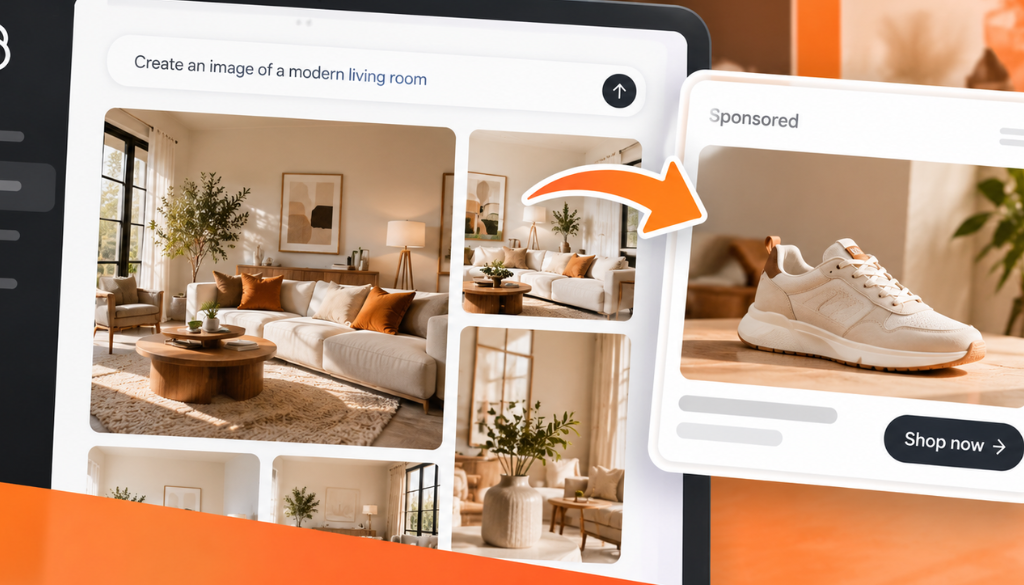
The visual ad format uses images to help people imagine how a product or service could fit into their lives. OpenAI describes three kinds of imagery: product inspiration, product usage, and the experiences a product or service makes possible. The stated goal is to let a shopper discover a new brand, see what makes an offering distinctive, and decide what to buy.
OpenAI will test the format during image generation in ChatGPT first. It says the ads will be “clearly labeled, and remain separate from the image being created.” Testing begins later this month in the US with an initial group of advertisers, and OpenAI says it will keep adding formats and capabilities over time.
Who Will See the Visual Ads?
OpenAI’s announcement does not say which plans will see the visual format specifically. Its Help Center page on ads in ChatGPT describes who sees ChatGPT ads in general: ads may appear for users on the Free and Go plans, while Plus, Pro, Business, Enterprise, and Edu accounts do not have ads. OpenAI also says it does not show ads to accounts identified as belonging to people under 18, does not show them in Temporary Chats, and does not make ads eligible to appear near sensitive topics such as personal health, mental health, or politics.
Free-plan users who prefer not to see ads can switch to an Ads-Free experience. OpenAI says that option comes with lower usage limits and reduced feature access, such as image generation and deep research.
How Will Advertisers Measure ChatGPT Ads?
OpenAI says its measurement approach supports both in-house and partner-led solutions, using the systems advertisers already rely on. The announcement names partners across four groups:
| Measurement area | Partners named by OpenAI | What OpenAI says it does |
|---|---|---|
| Conversion data | Hightouch, Tealium, LiveRamp | Makes it easier to send conversion data from existing systems to ChatGPT Ads |
| Attribution | AppsFlyer, Triple Whale, Adjust, DV Rockerbox, Northbeam, Branch, Singular, Kochava, Airbridge, Tenjin | Supports Conversions API, reporting, and click attribution across web and app |
| Full-funnel and advanced measurement | Fospha, Measured, INCRMNTAL | Partnerships with full-funnel and advanced measurement providers |
| Incrementality | Haus, Measured, WorkMagic | Exploring geo-based experiments to understand the causal impact of ChatGPT Ads |
OpenAI is candid that its incrementality work is still at an early stage. Advertisers who already measure other paid channels with these tools can connect them to ChatGPT Ads rather than building a separate process.
What Early Results Did OpenAI Share?
OpenAI included three findings, each attributed to a measurement partner rather than to OpenAI itself:
- WeightWatchers: According to DV Rockerbox, the brand’s attributed cost per acquisition on ChatGPT Ads was 15.3% lower than its blended paid-search benchmark.
- Dose: WorkMagic reported statistically significant lift for the wellness brand, with 67% of incremental purchases coming from net-new customers.
- Portland Leather: According to Triple Whale, 93% of the brand’s visitors from ChatGPT Ads were new.
These are early, partner-reported results from three advertisers, measured with different methods, so they show what is possible rather than what to expect. The WeightWatchers comparison, for example, is against that brand’s own blended paid-search benchmark.
What Are the Brand Suitability Updates?
OpenAI says its placement guardrails assess whether a conversation is appropriate for advertising, keeping ads out of emotionally vulnerable, sensitive, or otherwise unsuitable contexts. It also supports those guardrails with automated review, human oversight, and ongoing monitoring.
- Negative Phrases: Now available to qualifying advertisers for narrow placement requirements specific to a brand’s own policies.
- DoubleVerify and Integral Ad Science pilots: OpenAI is developing brand suitability evaluation pilots in which these independent partners assess how its safety standards are applied in a controlled testing environment, without accessing private user conversations.
Why This Matters for Marketers and AEO
Visual ads put paid placements next to a creative activity, not only below a text answer. That is a different surface from the shopping and product results we have covered, and it fits a pattern in ChatGPT: images are becoming part of how people explore and buy, as with the new virtual try-on and Favorites features.
For paid teams, the more immediate change is measurement. Since Ads Manager launched, OpenAI has added generated ad creative, bulk product feed uploads, and a wider country footprint, and this update connects ChatGPT Ads to the attribution and incrementality tools many advertisers already use.
For AEO, the line OpenAI repeats matters most: advertising does not influence ChatGPT’s answers. Paid visuals and organic recommendations remain separate levers, so appearing in ads does not substitute for being a source ChatGPT chooses, which we explain in how ChatGPT chooses sources.
Frequently Asked Questions
What is ChatGPT’s new visual ad format?
It is an ad format that uses images to show product inspiration, product usage, or the experiences a product or service makes possible. OpenAI will test it first during image generation in ChatGPT.
When will visual ads start appearing in ChatGPT?
OpenAI says testing begins later in October 2026 in the US with an initial group of advertisers.
Will the ads appear inside the images ChatGPT generates?
No. OpenAI says ads will be clearly labeled and remain separate from the image being created.
Do ChatGPT ads influence the answers ChatGPT gives?
OpenAI says they do not. It states that advertising does not influence the answers ChatGPT provides, and its Help Center says ads run on systems separate from the chat model.
How can a business advertise in ChatGPT?
OpenAI says businesses can sign up at ads.openai.com. Availability depends on the country, so check OpenAI’s Ads Manager availability page for current status.
Sources: OpenAI: Building advertising for the way people use AI, OpenAI Help Center: Ads in ChatGPT, Search Engine Roundtable.
About the author
Kai Williams
Kai Williams has been in marketing for years, with a long background in SEO before AEO had a name. He stepped into Answer Engine Optimization the moment AI started reshaping how people search, and has been tracking the shift ever since. At Prompt Insider, he covers AEO, AI marketing, and the future of search, breaking down what is changing and what brands need to do about it.